
Should You Phase a Plumbing or Mechanical Project? What Property Owners Should Consider First
Lance Luke
6/11/20265 min read
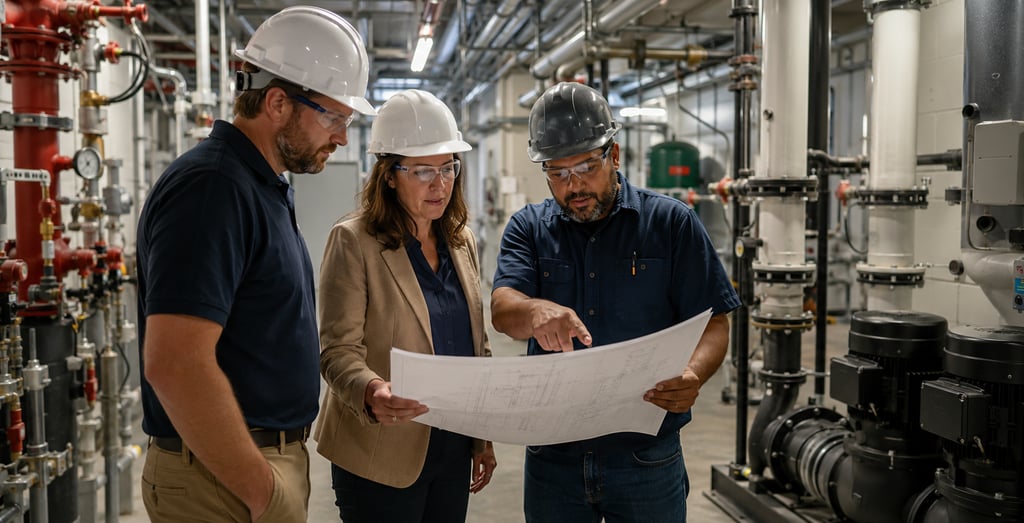
Large plumbing and mechanical projects are never easy decisions for a property owner, condominium board, apartment operator, or building manager. When the system is aging, leaks are becoming more frequent, air conditioning is no longer reliable, or residents are starting to complain, the question usually becomes: should the entire project be done now, or should it be divided into phases over several years?
At first, phasing can sound like the most practical answer. It spreads the expense over time, gives the association or owner more room in the annual budget, and may reduce the immediate financial pressure on the property. In some cases, phasing may also help avoid work during a busy rental season, holiday season, or peak occupancy period.
However, phasing should never be treated as an automatic solution. In my experience, delaying portions of a major plumbing or mechanical replacement can create hidden costs, repeated disruptions, and continued risk to the building. Before making that decision, the owner or board should look beyond the first-year budget and carefully consider the full impact of the project.
Start With the Condition of the System
The first question is not whether the project can be phased. The first question is whether the system is safe, reliable, and stable enough to wait.
A plumbing or mechanical system does not usually fail in a neat and predictable order. One section may look worse than another, but the underlying system may be the same age throughout the building. Piping, valves, pumps, water heaters, drain lines, mechanical equipment, and related components often deteriorate together over time.
This is why a proper evaluation is important. Before deciding on phasing, the owner should understand the age of the system, the history of leaks or failures, the level of corrosion or wear, the cost of recent repairs, and whether the problem is isolated or building-wide. Without that information, phasing may only postpone a larger problem.
The Cost of Starting and Stopping Work
Many people look at phasing as a way to save money, but they sometimes overlook the cost of repeatedly starting and stopping a construction project.
Every time a contractor begins a new phase, there is preparation involved. The contractor has to schedule crews, coordinate access, bring tools and materials to the site, set up staging areas, protect the property, notify residents, coordinate permits and inspections, and organize the work area. When that phase is completed, the contractor must remove materials, clean up, take down staging, and close out that portion of the work.
When the project is broken into several phases, those setup and closeout costs may be repeated again and again. The property may also face repeated disruption, repeated scheduling coordination, and repeated communication with residents. What appears to be a smaller project each year can become more expensive when the total project is viewed from beginning to end.
Future Pricing Is Not Guaranteed
Another important issue is future cost. Materials, labor, equipment, insurance, fuel, and subcontractor pricing can change from year to year. A contractor may be able to provide pricing for the current phase, but that does not mean the same pricing will apply two or three years later.
When a project is completed all at once, the owner may have a better opportunity to lock in the current scope, schedule, and pricing. When the work is delayed, future phases may be affected by material increases, labor shortages, revised code requirements, or changes in contractor availability.
This does not mean every project must be done at one time. It does mean that the owner should not assume the later phases will cost the same as the first phase. That assumption can create budget problems later.
Existing Problems May Continue During the Delay
If the building is already experiencing leaks, mechanical failures, water damage, poor air conditioning performance, or repeated service calls, phasing may leave part of the problem in place.
That untreated portion of the building can continue to fail while the completed portion is already improved. This can lead to more emergency repairs, more resident complaints, more damage claims, and more frustration for management. In some cases, repeated leaks or damage history may also affect insurance concerns.
This is one of the biggest risks of phasing. The project may look less expensive in the beginning, but the building may continue to spend money on temporary repairs while waiting for the remaining phases to be completed.
Resident Disruption and Community Concerns
For condominiums, apartments, resorts, and multi-unit buildings, the resident impact should not be ignored. Construction affects people’s daily lives. It may involve water shutoffs, noise, access to units, workers entering occupied spaces, temporary equipment, parking limitations, or schedule changes.
When a project is phased over several years, residents may feel that the disruption never really ends. Some owners may also question why one part of the building is being improved before another. This can create tension among residents, board members, management, and contractors.
A single well-planned project may be inconvenient for a shorter period, but it can also provide a clearer beginning and ending point. That matters when maintaining confidence within the community.
When Phasing May Still Make Sense
There are situations where phasing may be reasonable. A property may not have enough funds available to complete the entire project at once. A resort property may need to avoid peak rental months. A building may have sections that can logically be separated without increasing risk. Some mechanical systems may also be divided in a way that allows one area to be upgraded without leaving the rest of the building exposed to serious failure.
The key is to make that decision based on facts, not just budget pressure. A phased plan should be supported by a professional assessment, a realistic cost projection, a schedule that makes sense, and a clear understanding of what risks remain during the delay.
Work With the Right Professionals
A good contractor or consultant should not simply say yes to whatever phasing plan is requested. The right professional should help the owner evaluate the project from a technical, financial, and practical standpoint.
That means reviewing the existing condition, identifying the most urgent areas, explaining the risks of delay, estimating repeated mobilization costs, discussing resident impacts, and helping the owner understand whether phasing will truly save money or only shift the cost into future years.
For a major plumbing or mechanical project, the cheapest-looking approach is not always the best approach. The better question is: what is the most responsible way to protect the building, control cost, reduce disruption, and avoid repeated damage?
Final Thought
Phasing a plumbing or mechanical project may be the right decision in some cases, but it should be made carefully. A building system that is already failing will not always wait patiently for the next budget cycle. Delaying part of the work may reduce the immediate expense, but it can also increase future costs, prolong disruption, and leave the property exposed to continued problems.
Before deciding, take time to look at the full picture. Consider the condition of the system, the cost of repeated mobilization, future pricing, resident disruption, and the risk of additional damage. With the right guidance, the owner or board can make a decision that protects both the property and the people who depend on it.
Reach out anytime, we’re here to help.
Phone
(808) 422-2132
© 2026. All rights reserved.
Contact
newsletter