
Miami’s Sinking Skyscrapers: A Wake-Up Call for Coastal Construction
As a construction and building safety expert, I’ve seen my fair share of structural issues—everything from deteriorating piping systems to foundation cracks and a sinking highrise building in San Francisco.. But the alarming new findings out of Miami raise an issue that is much bigger than a single building’s maintenance problem.
Lance Luke
4/9/20253 min read
As a construction and building safety expert, I’ve seen my fair share of structural issues—everything from deteriorating piping systems to foundation cracks and a sinking highrise building in San Francisco.. But the alarming new findings out of Miami raise an issue that is much bigger than a single building’s maintenance problem.
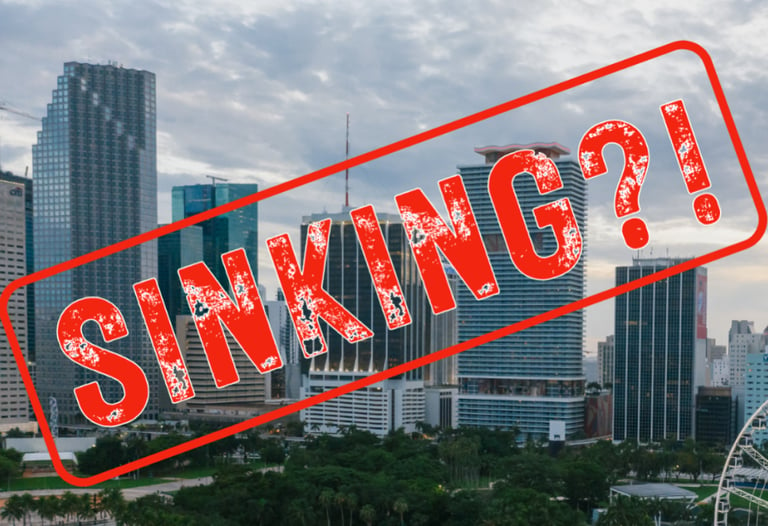
Since 2016, 35 high-rise buildings on Miami’s barrier islands, including Trump Tower III, have sunk as much as eight centimeters (three inches) into the ground. This isn’t just a minor settlement issue—it’s a clear sign that Miami’s foundation is literally shifting beneath our feet.
A recent study, published in Earth and Space Science by the University of Houston’s Department of Civil and Environmental Engineering, confirms what many of us in the industry have long suspected: new construction is placing excessive stress on Miami’s fragile coastal land, leading to dangerous subsidence (land sinking).
What’s Causing Miami’s High-Rises to Sink?
Construction professionals and city planners know that land subsidence can result from a variety of factors, including geology, groundwater depletion, and structural loads. In Miami’s case, researchers are pointing directly at the weight and vibrations from high-rise construction as the leading cause.
Miami’s subsurface is made up of porous limestone and loose sand, which means the ground beneath these buildings is compressing under pressure. Some of the sinking slows over time as the ground settles—but for other structures, the sinking continues at a steady rate, raising serious concerns about long-term structural stability.
How Scientists Are Tracking the Problem
As someone who has worked on countless structural inspections, I know that detection is the first step toward prevention. Researchers at the University of Houston, University of Miami, NASA’s Jet Propulsion Laboratory, and the University of Hannover have been tracking Miami’s sinking buildings using Interferometric Synthetic Aperture Radar (InSAR), a satellite-based technology capable of detecting movement in the Earth’s surface as small as the thickness of a credit card.
InSAR allows engineers and scientists to compare satellite images over time and identify tiny shifts in elevation. The data from this study revealed that subsidence extends beyond individual buildings, affecting areas up to 320 meters (1,050 feet) away.
The Hard Truth: Coastal Construction Risks Are Growing
This isn’t an isolated issue. In Sunny Isles Beach, Bal Harbour, and Surfside, up to 70% of newly built high-rises show measurable sinking. If left unaddressed, subsidence can lead to:
✅ Foundation Cracks – Weakening the structural integrity of buildings.
✅ Water Infiltration & Flooding – As buildings settle, underground infrastructure like drainage systems and sewage pipes can become misaligned or break.
✅ Increased Risk of Collapse – While complete building failure is rare, prolonged subsidence could lead to partial collapses, as seen in past disasters.
With rising sea levels and extreme weather events already threatening Miami’s coastal zones, this additional factor could be the tipping point for serious safety concerns in high-rise developments.
What Needs to Change in Coastal Construction?
Having worked on major building projects, I understand the pressure to develop, build higher, and maximize land use. But when the ground itself is shifting, we need a new approach to coastal construction.
Here are some immediate steps that should be taken to prevent future disasters:
Stronger Geotechnical Assessments Before Building – Before any new high-rise goes up, a thorough geological study should be required to assess subsidence risks.
Stricter Building Codes & Weight Distribution Standards – Construction regulations must take Miami’s fragile geology into account and limit structural loads where necessary.
Ongoing Structural & Ground Movement Monitoring – Developers should be required to implement long-term monitoring programs using technologies like InSAR to track any movement beneath their buildings.
Urban Planning with Resilience in Mind – City planners must consider subsidence risks alongside sea-level rise when approving new developments. This means integrating geospatial technology into land-use policies and setting limits on certain high-risk areas.
Final Thoughts: Building for the Future, Not Just for Today
As someone who has spent decades advising on construction safety, I can tell you that these issues don’t fix themselves. Engineers, developers, and policymakers must work together to develop safer, smarter construction practices—or we risk creating a skyline that isn’t just sinking but failing.
The technology to track and mitigate subsidence exists. The real question is: Will we use it before it’s too late
About the Author
Lance Luke is a national building and construction expert with expertise in building inspections, risk assessment, and building safety. He has advised property owners, developers, and government agencies on best practices for sustainable and resilient construction.
Reach out anytime, we’re here to help.
Phone
(808) 422-2132
© 2026. All rights reserved.
Contact
newsletter