COVID-19 Impacts Building Safety with Faulty HVAC Systems & Leaking Plumbing
COVID-19 changed the way many property owners, managers, and building professionals look at building safety. Before the pandemic, many people thought of safety mainly in terms of structure, fire protection, electrical systems, and visible hazards. COVID-19 brought more attention to indoor air quality, ventilation, plumbing maintenance, sanitation, and the overall condition of building systems.
Lance Luke
3/16/20222 min read
COVID-19 changed the way many property owners, managers, and building professionals look at building safety. Before the pandemic, many people thought of safety mainly in terms of structure, fire protection, electrical systems, and visible hazards. COVID-19 brought more attention to indoor air quality, ventilation, plumbing maintenance, sanitation, and the overall condition of building systems.
Faulty HVAC systems and leaking plumbing can both affect building health. These systems are often out of sight, but they have a direct impact on occupants.
HVAC Systems and Indoor Air Quality
Heating, ventilation, and air conditioning systems play an important role in maintaining indoor air quality. A properly functioning HVAC system helps circulate air, control humidity, filter contaminants, and maintain comfort.
When HVAC systems are poorly maintained or not operating correctly, indoor air may become stale, humid, or poorly filtered. In some buildings, limited ventilation can allow contaminants to remain indoors longer than they should.
During and after COVID-19, many building owners became more aware of the need to inspect filters, clean components, review ventilation rates, and confirm that systems are operating as intended.
Faulty HVAC Systems Can Create Building Problems
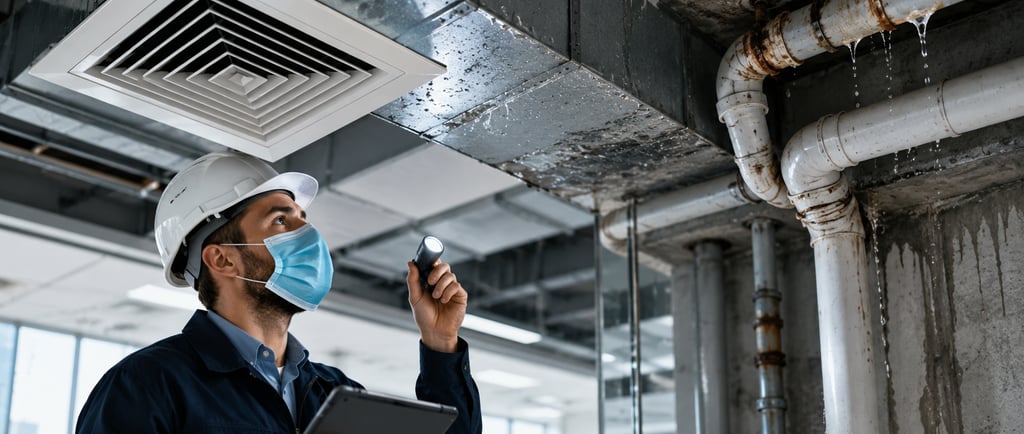
A faulty HVAC system can contribute to several problems, including uneven temperatures, moisture buildup, poor air circulation, and condensation. Moisture and condensation can lead to mold growth, damage to ceilings or walls, and deterioration of materials.
If ducts are dirty, damaged, or poorly sealed, air distribution may be inefficient. If filters are not changed regularly, the system may work harder and provide reduced air quality. If equipment is oversized, undersized, or improperly balanced, occupants may experience discomfort and poor ventilation.
Plumbing Leaks and Health Concerns
Leaking plumbing can create hidden moisture inside a building. Water can travel behind walls, under flooring, above ceilings, and through shafts before becoming visible. This can lead to mold growth, damaged finishes, corrosion, and potential structural concerns.
In buildings that experienced reduced occupancy during the pandemic, plumbing systems may have also sat unused for periods of time. Low water usage can contribute to stagnant water in pipes, dried traps, odors, and other maintenance concerns.
The Connection Between Moisture and Indoor Conditions
HVAC and plumbing systems often affect each other indirectly. A leaking pipe can raise humidity levels in enclosed spaces. A poorly functioning HVAC system may fail to remove excess moisture from the air. Together, these issues can create conditions that are unhealthy and damaging to the building.
Moisture-related problems should be addressed at the source. Cleaning or repainting the visible area is not enough if the leak continues or if ventilation problems remain.
What Building Owners Should Review
Property owners and managers should consider regular inspections of HVAC and plumbing systems. This includes checking air filters, ducts, vents, condensate lines, drain pans, mechanical rooms, plumbing fixtures, exposed pipes, and areas where leaks are likely to occur.
It is also important to look for signs of water staining, musty odors, condensation, rust, low water pressure, and unusual HVAC performance.
Final Thoughts
COVID-19 reminded property owners that building safety includes more than the visible condition of a structure. Indoor air quality, ventilation, moisture control, and plumbing maintenance all matter. Faulty HVAC systems and leaking plumbing can affect comfort, health, and the long-term condition of a building.
Reach out anytime, we’re here to help.
Phone
(808) 422-2132
© 2026. All rights reserved.
Contact
newsletter