5 Different Types of Construction Defects
Construction defects can affect the safety, performance, and value of a building. Some defects are visible right away, while others appear months or years after the project is completed. A defect may involve poor workmanship, improper materials, design errors, or failure to follow building codes and project specifications.
Lance Luke
3/16/20222 min read
Construction defects can affect the safety, performance, and value of a building. Some defects are visible right away, while others appear months or years after the project is completed. A defect may involve poor workmanship, improper materials, design errors, or failure to follow building codes and project specifications.
Understanding the common types of construction defects helps owners, associations, contractors, and property managers identify problems early and determine the proper next steps.
1. Design Defects
Design defects occur when the plans, specifications, or engineering details are incomplete, incorrect, or unsuitable for the building conditions. These problems may involve structural systems, drainage, waterproofing, ventilation, fire safety, accessibility, or other required building elements.
A design defect may not be obvious during construction. It often becomes clear after the building is used and the system does not perform properly. For example, improper drainage design may allow water to collect near the foundation or enter the building envelope.
2. Material Defects
Material defects involve products that are defective, unsuitable, damaged, or improperly selected for the project. Even if installation is done correctly, poor materials can still fail.
Examples include defective roofing products, unsuitable sealants, low-quality fasteners, improperly rated windows, or concrete materials that do not meet performance requirements. In some cases, materials may be appropriate in general but not suitable for the specific climate or building exposure.
3. Workmanship Defects
Workmanship defects are among the most common construction problems. These occur when work is not performed according to accepted standards, manufacturer instructions, building codes, or project specifications.
Common workmanship defects include improper flashing, poor waterproofing, uneven flooring, inadequate fastening, incorrect installation of doors and windows, poor concrete placement, and incomplete firestopping. Workmanship issues can lead to water intrusion, structural concerns, premature deterioration, and costly repairs.
4. Subsurface and Foundation Defects
Subsurface and foundation defects involve soil, grading, drainage, settlement, or foundation performance. These problems can be serious because they affect the support system of the building.
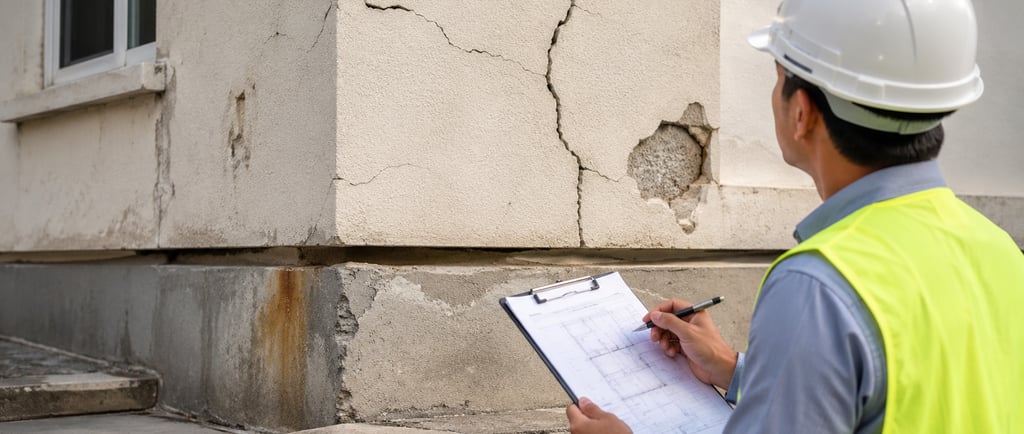
Signs may include foundation cracks, uneven floors, doors that do not close properly, wall cracks, or separation between building components. Poor soil preparation, inadequate compaction, improper drainage, or failure to account for site conditions can all contribute to foundation-related defects.
5. Building Envelope Defects
The building envelope includes the roof, exterior walls, windows, doors, balconies, sealants, waterproofing, and related components that separate the interior from the outside environment. Defects in the envelope often lead to water intrusion.
Examples include missing flashing, failed sealants, improperly installed windows, roof leaks, balcony waterproofing failures, and exterior wall cracks. These defects can cause interior damage, mold growth, corrosion, and deterioration of structural components.
Why Construction Defects Must Be Evaluated Properly
Not every visible problem reveals the full cause. A crack may be cosmetic, or it may indicate movement. A stain may come from plumbing, roofing, window leakage, or condensation. Proper evaluation is necessary to determine what failed, why it failed, and what repair is required.
A qualified building expert can review documents, inspect site conditions, identify defects, and provide recommendations for corrective action.
Final Thoughts
Construction defects can be caused by design issues, poor materials, workmanship problems, foundation conditions, or building envelope failures. The sooner these defects are identified, the easier it is to prevent further damage and protect the building’s long-term performance.
Reach out anytime, we’re here to help.
Phone
(808) 422-2132
© 2026. All rights reserved.
Contact
newsletter