4 Types of Corrosion Around Your Building
Corrosion is a common building maintenance issue, especially in environments exposed to moisture, salt air, humidity, and weather. In Hawaii and other coastal areas, corrosion can occur faster because metal components are exposed to salt-laden air and moisture. Corrosion is not just a cosmetic concern. It can weaken structural components, damage building systems, affect safety, and increase repair costs if not addressed.
Lance Luke
3/16/20222 min read
Corrosion is a common building maintenance issue, especially in environments exposed to moisture, salt air, humidity, and weather. In Hawaii and other coastal areas, corrosion can occur faster because metal components are exposed to salt-laden air and moisture.
Corrosion is not just a cosmetic concern. It can weaken structural components, damage building systems, affect safety, and increase repair costs if not addressed.
1. Surface Corrosion
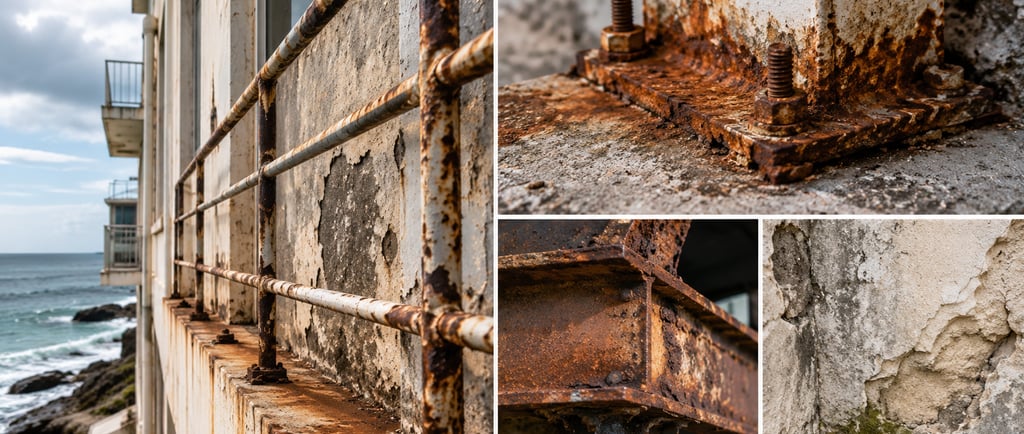
Surface corrosion is often the first visible sign of metal deterioration. It may appear as rust, discoloration, staining, or flaking on exposed metal surfaces.
This type of corrosion may be found on railings, fences, fasteners, brackets, metal doors, exterior hardware, and mechanical equipment. While surface corrosion may begin as a maintenance issue, it can progress if the protective coating fails and the metal continues to deteriorate.
Early treatment, cleaning, priming, and repainting can often slow the spread of surface corrosion.
2. Galvanic Corrosion
Galvanic corrosion occurs when two different metals come into contact in the presence of moisture or an electrolyte, such as salt water. One metal becomes more likely to corrode than the other.
This can happen when incompatible fasteners, connectors, brackets, or metal components are used together. For example, certain combinations of steel, aluminum, copper, and stainless steel can create corrosion problems if not properly separated or protected.
Using compatible materials, protective barriers, and proper coatings can help reduce the risk of galvanic corrosion.
3. Pitting Corrosion
Pitting corrosion creates small holes or pits in metal surfaces. It can be difficult to detect because the damage may appear minor on the surface while the metal is weakening below.
This type of corrosion is especially concerning for pipes, tanks, railings, structural connectors, and other components where localized weakening can affect performance. Pitting can progress over time and may eventually lead to leaks, fractures, or failure.
Regular inspection is important because small pits can be easy to overlook.
4. Structural Corrosion
Structural corrosion affects components that help support or secure a building. This may involve reinforcing steel, structural steel, anchor bolts, connectors, balcony components, guardrails, or other load-bearing elements.
When structural corrosion occurs, the issue should be taken seriously. Rusting steel can expand, crack surrounding concrete, reduce capacity, and create safety hazards. In concrete buildings, corrosion of embedded reinforcing steel can cause spalling, cracking, and delamination.
Structural corrosion should be evaluated by a qualified professional to determine the extent of damage and the proper repair method.
Prevention and Maintenance
Corrosion prevention begins with proper material selection, protective coatings, drainage, ventilation, and regular maintenance. Buildings in coastal areas should be inspected more often because exposure conditions are more severe.
Owners should look for rust stains, bubbling paint, cracked concrete, exposed steel, loose railings, corroded fasteners, and damaged coatings.
Final Thoughts
Corrosion can appear as a minor surface issue, but it can become a serious building problem. Surface corrosion, galvanic corrosion, pitting corrosion, and structural corrosion should be identified and addressed before they lead to greater damage or safety concerns.
Reach out anytime, we’re here to help.
Phone
(808) 422-2132
© 2026. All rights reserved.
Contact
newsletter